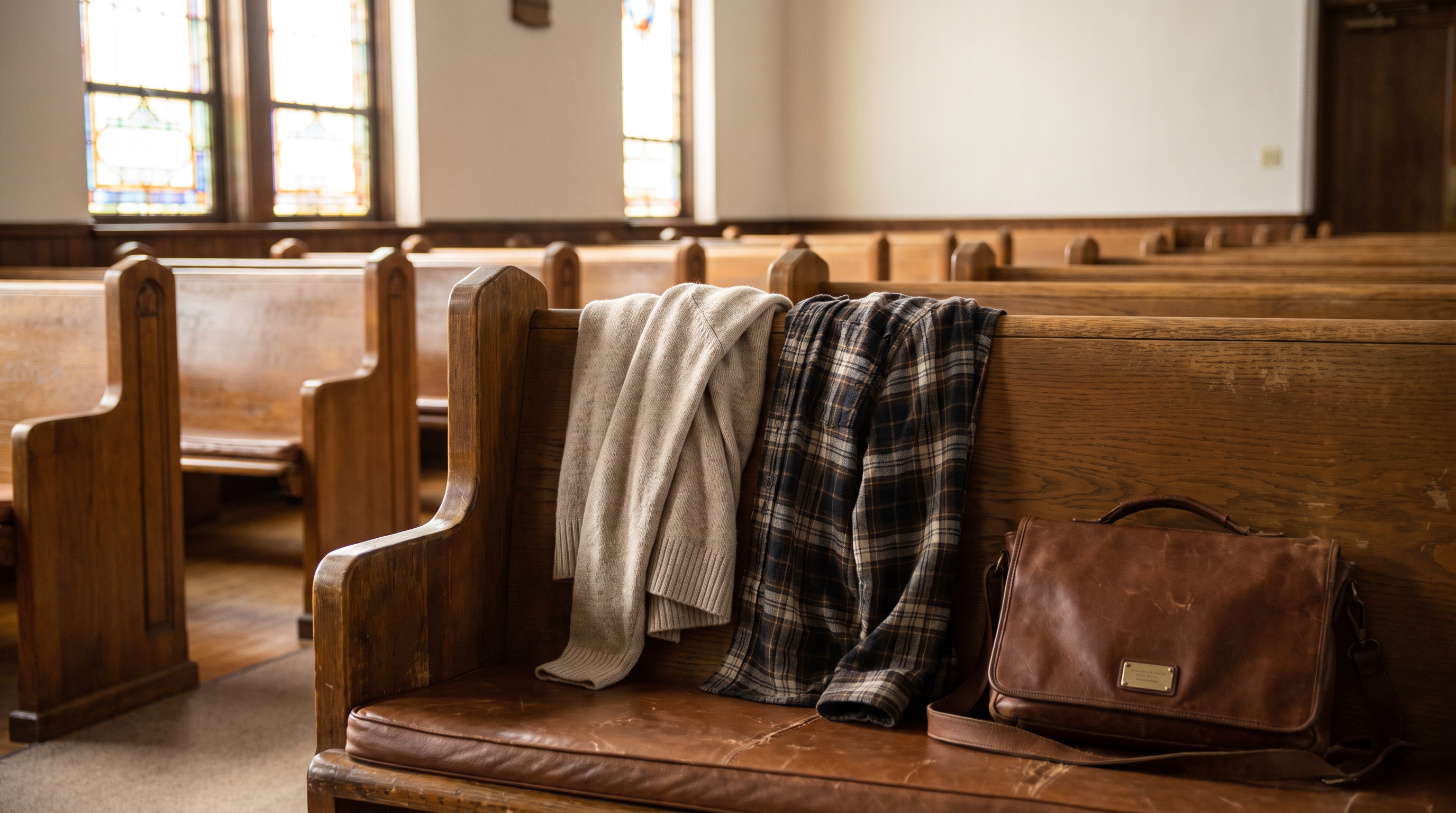
The best concealed carry clothes for women are mostly ones you already own, chosen for drape, such as a loose knit sweater, a quarter-zip, or an open overshirt over a waist-level holster with a stiff belt. Buy dedicated garments only after a home test shows printing.
If your handgun lives in a drawer, your wardrobe may be part of the reason. A holster that digs, a sweater that clings, or a waistband that gapes the moment you sit down in the car, the pew or the doctor's waiting room can each hand you a perfectly good excuse to leave the gun at home. A firearms trainer writing in America's 1st Freedom names a reluctance to start carrying, and then to keep carrying, as the biggest reflection of the hurdle women face. An outfit you can wear comfortably for eight hours removes one excuse before it forms.
This guide is written for women 55 to 75 who own a handgun and want to dress the way they already dress. It covers knit sweaters, quarter-zips and jeans, and it is organized around the two things that decide whether you carry: printing and comfort. Printing means the outline of the holster or gun shows through your clothes. If you want dresses, skirts and thigh holsters, our piece on concealed carry fashion for everyday wear covers them, and this article does not repeat it.
What makes a concealed carry outfit work for a woman over 55?
A working outfit has three parts: a cover layer that hangs away from the body, a holster that sits where your body and your day allow, and fabric you can tolerate while seated for hours. Fix those three and most of your existing closet qualifies.
The cover layer does the concealing. The holster and belt decide where the weight sits and whether the grip tilts into your side or away from it. Comfort decides whether you carry on Tuesday or only on the day you feel brave. Nobody needs to be brave to wear a sweater.
If an outfit prints, look at the fit of the clothes and the holster. Your hands, your age and your strength have nothing to do with it. Technique and setup solve this, which is the same point we make about racking a slide.
Which everyday clothes work best?
Start with what you wear to the grocery store, church, lunch with friends and the doctor's office. The table below sorts common pieces by how they behave over a waist-level holster.
| Garment | Why it works | What to watch |
|---|---|---|
| Loose knit sweater, mid-weight | Hangs from the shoulders and covers the hip without clinging | Thin jersey knits cling and show the holster edge |
| Quarter-zip pullover | Hem sits below the belt line and the fabric has some body | Check that the hem does not ride up when you reach or sit |
| Open cardigan or overshirt | Falls straight and breaks up any outline | Wear it open and long enough to pass the holster |
| Fleece or quilted vest | Adds thickness over the holster | A vest ends at the hip, so test your draw path |
| High-waist jeans | The waistband holds an inside-the-waistband holster in place | Soft stretch denim can sag under weight; add a stiff belt |
| Straight or relaxed trousers | Leave room around the holster | Slim cuts press the holster against you when you sit |
| Flannel or chambray shirt, left open | Reads as casual and nothing else | Buttoned flannel over a smooth tee can pull across the hip |
Texture helps. Heathered, ribbed or slightly nubby fabric hides an edge better than a smooth single layer. A dark or patterned fabric hides it better than a pale solid.
How do I stop my holster from printing?
Most printing has four causes: clingy fabric, a hem that is too short, a holster tilted the wrong way, and a gun too large for the clothes. Change one at a time and check each change in a mirror.
Fabric first. Swap a clingy knit for the same sweater in a looser size, or add an open layer on top. Then hem length. A top that ends at the belt line reveals the holster whenever your arm lifts, so choose one that ends a few inches below it.
Then the holster. A holster that rides high and tight against the body usually prints less than one that hangs loose, and a cant that suits your build keeps the grip from poking out. Our guide to the best IWB holster for women explains how body shape changes the answer, and the page on a belly band holster covers the option many women choose when waistbands are the problem.
Last, the gun. A pistol that is too big for your frame will print in almost anything. If you carry a full-size pistol and keep struggling, read our notes on the Ruger LCP MAX and the Glock 43X, both written for women choosing a carry gun.
Does special concealed carry clothing earn its price?
Sometimes. Dedicated clothing solves specific problems, such as having no belt line or wearing athletic wear. It is the second step, taken after you know which problem your regular clothes cannot solve.
A review on Gunvera sorts the category into three groups: garments with built-in holster pockets, beltless holster systems that work under any outfit, and wardrobe strategies that use regular clothing to conceal a standard holster. The table below turns that into a buying decision.
| Approach | Best for | Trade-off |
|---|---|---|
| Wardrobe strategy with a standard holster | Women who already like their closet | Needs a home test and a good belt |
| Garments with built-in holster pockets | Leggings, athletic wear, days without a belt | Limits you to small pistols that fit the pocket, and adds a layer that may feel warm |
| Beltless holster systems | Outfits with no usable waistband | Takes more practice to draw smoothly |
The market is moving toward more choices. A retailer blog on Kinsey Rhea says "We're seeing a rise in clothing, or purses, jackets or coats, pants or skirts with hidden pockets, and garments with built-in holsters." A maker of range wear, Make Ready Range Wear, puts the buyer's wish this way: "You shouldn't have to choose between looking great and feeling secure." Both are sellers, so read their claims as their own.
One caution about purses. A reporter at the Charleston Gazette-Mail describes concealed carry bags that can be zipped closed and locked, and notes the design departs from the patronizing "shrink it and pink it" approach some manufacturers still take. Even a good bag is off-body carry. A bag can be set down, grabbed or left behind, so treat it as a backup to a holster on your body.
How do I test an outfit at home before I trust it in public?
Test it at home, with the firearm unloaded and checked, or with an empty holster and a training dummy of the same size. Never test with a loaded gun.
- Dress for the day, including shoes and the coat you would really wear.
- Stand in front of a full-length mirror, then turn to each side and look at your back.
- Sit in a hard chair and a soft couch. Check the hem and the holster edge.
- Reach for a high shelf, bend to pick up a bag, and lean across a table.
- Walk the hallway for ten minutes. Notice rubbing, pinching and sagging.
- Practice your draw stroke slowly with the cover layer in place. If the garment catches, change the garment.
- Wear the setup around the house for a week before you rely on it outside.
Step six is where outfits fail most often. A sweater that hides everything but snags on the way up is a poor carry sweater. Home practice is the right place to learn this, and our guide to dry fire training for women shows how to build the draw without a range or an audience.
Where do the holster and the belt fit in?
They matter as much as the shirt. A stiff belt keeps the holster from sagging and keeps the grip at a steady angle, which means your cover layer has less to hide.
WGOAA's instructors teach this directly. Jessica Hazelaar, founder of Eclipse Holsters, teaches Precision Carry inside The Armed Female Academy. Hannah Hannah, a competitive shooting instructor and founder of FemNine, teaches Carry Like A Woman™ in the same Academy. If you are unsure whether the gun in your drawer fits your hands, our list of the best guns for women with weak grip or arthritis is a place to start.
If you wonder whether you are ready to carry at all, take the practical self-assessment first. Clothes cannot fix a plan you have not made.
What are the common mistakes?
- Buying special clothing first. A drawer of holster leggings does not help if the issue is a short hem. Test your regular clothes before spending.
- Wearing a cover layer buttoned tight. A cover garment works when it hangs open or loose. Pulled tight, it shows what it covers.
- Skipping the sit test. Many outfits pass standing in a mirror and print the moment you sit in a car seat.
- Choosing a thin, smooth knit. It clings at the hip and shows the holster edge. A heathered or ribbed knit does better.
- Using a soft belt. A belt that bends lets the holster tilt, and the grip swings out.
- Changing three things at once. Change the garment, the holster or the gun one at a time, so you know which fix worked.
- Leaving the gun in the drawer until the perfect outfit exists. A good-enough outfit that you wear is better than a perfect one you never buy.
Frequently asked questions
What kind of clothing is best for concealed carry for women?
Loose knit sweaters, quarter-zips, open overshirts and relaxed trousers work well over a waist-level holster, because they hang from the shoulders and leave room at the hip. Textured or heathered fabric hides an outline better than smooth, clingy fabric. Test any outfit sitting, reaching and walking before you rely on it.
What is the best way for women to conceal carry?
The best way is the one you will wear every day, comfortably and safely. For many women that is an inside-the-waistband holster on a stiff belt, or a belly band when waistbands do not work. Pick the position that fits your body, then practice your draw at home with the cover layer on.
What clothes should I wear when concealed carrying?
Wear the cover layer you would choose anyway: an open cardigan, a flannel shirt, a longer sweater, or a quarter-zip with a hem below the belt. Add one layer when in doubt. Avoid thin, clingy knits and short tops that ride up when you reach.
Do I need to buy concealed carry clothing made for women?
Not at first. Test your own wardrobe with a good holster and belt. If you still print, or you have no belt line, built-in holster garments or beltless systems may be worth a try. Check that the pocket or system fits your exact gun and your draw.
Your next step today
Choose one outfit you wear every week, put on your holster and belt, and run the seven-step home test above with an unloaded, checked firearm or a training dummy. Write down the one thing that failed, change only that, and test again tomorrow.
If you want an instructor's eye on your setup, Precision Carry and Carry Like A Woman™ are both taught inside The Armed Female Academy, and our Concealed Carry Training Checklist lists what to work on before you carry. Members can also read more in the WGOAA membership details.
WGOAA and the Armed Female Academy provide firearms education for informational purposes only. Training does not guarantee any specific outcome in a defensive situation. Online training is not a substitute for hands-on, in-person instruction with a qualified instructor. Always follow all applicable federal, state, and local firearms laws. WGOAA does not provide legal advice; consult a licensed attorney in your state regarding concealed carry and self-defense law.
Always treat every firearm as if it is loaded, keep your finger off the trigger until you are ready to fire, and never point a firearm at anything you are not willing to destroy.
Carry and clothing rules vary by state. Confirm current law with official state sources or a licensed attorney before relying on it.