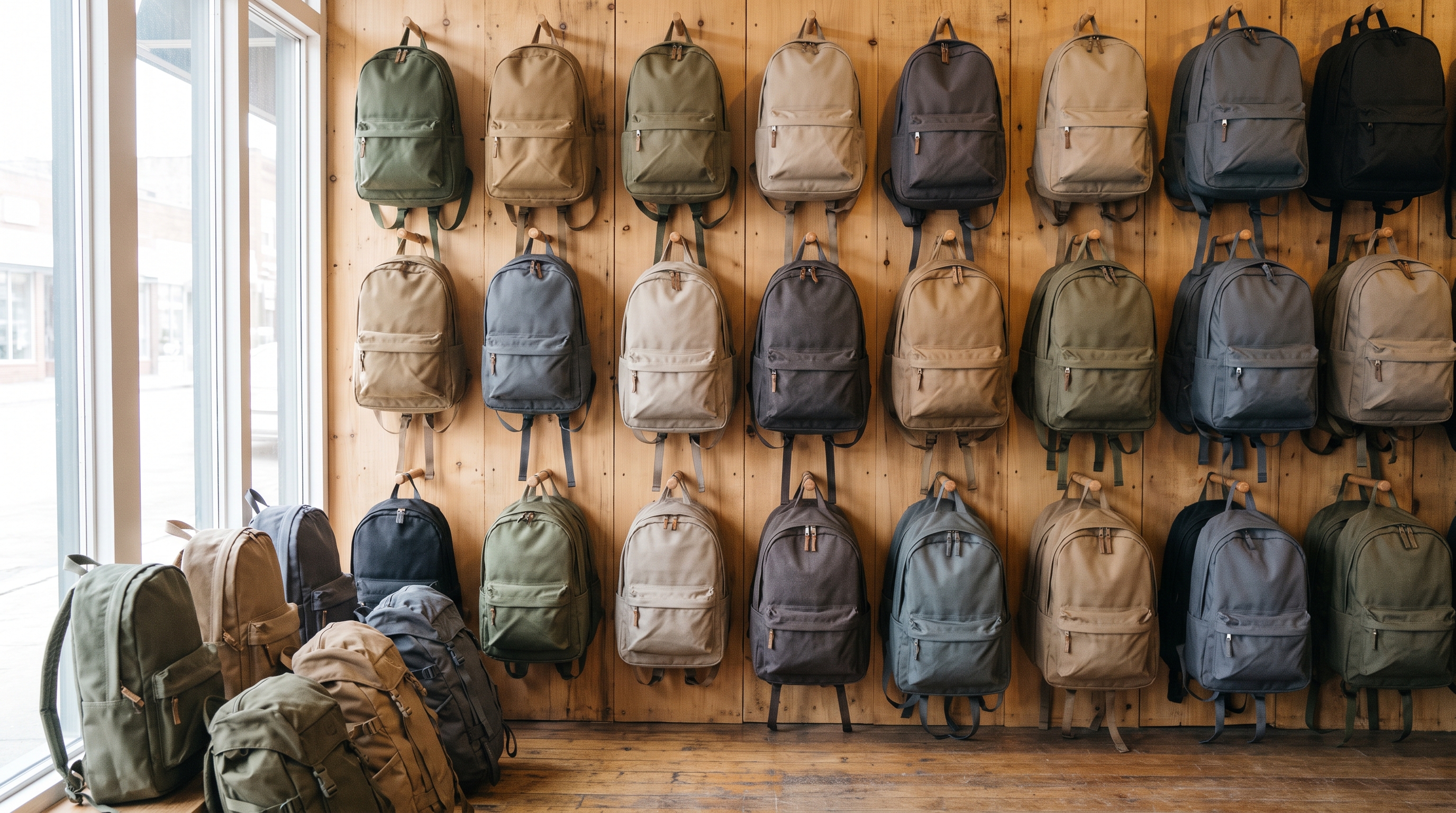
A concealed carry backpack works for a woman when her clothes block on-body carry and she keeps the pack on her body at all times. The trade-offs are slower access, a gun that is out of your control whenever the bag is off your back, and a compartment that must fit your pistol. (source: America's 1st Freedom)
Why does carrying in a backpack feel like the easy answer?
WGOAA is by women, for women, so we write this for the woman who owns a handgun, bought it with good intentions, and still hasn't settled how to carry it. The gap is rarely your fault. Most carry advice assumes a belt, a cover shirt and a body shape you may not have. A backpack looks like a way around all of that.
It can be. It also moves the gun off your body, which changes what you have to practice. A trainer at Gunsite Academy, writing in America's 1st Freedom, lists the purse question among those women ask and says on-body carry is always better, but there are times. A backpack is the same kind of choice. Sometimes it fits your day. You should know what it costs.
What is a concealed carry backpack, and who uses one?
A concealed carry backpack is an ordinary-looking pack with a dedicated compartment, usually fitted with a holster or a retention panel, built to hold a handgun. Reviewers praise the better ones for looking like tech bags instead of tactical gear. One reviewer at The Armory Life says of a sling bag that it "looks like a tech bag, not a tactical one."
Women tend to reach for one in three situations. The outfit cannot hide a holster. The day already involves carrying a bag. Or a waistband, a hip or a stiff hand makes on-body carry miserable. A bag maker's 2018 post on the Cameleon Bags blog says more women were turning to personal firearms as their first line of defense. That is a retailer's claim from 2018, not a current measurement, but it matches why these bags exist.
What are the real advantages of carrying in a backpack?
The advantages are fit with your clothes, comfort, and a lower chance of anyone noticing. You do not have to dress around a holster. A dress, a knit sweater or loose slacks with no belt all work.
Three things help most:
- Clothing freedom. The gun does not depend on a waistband, a jacket or a cut of shirt.
- Comfort. Nothing presses on your hip or stomach through a long day.
- Blends in. A plain pack draws less attention than one that looks like gear. The Armory Life reviewer says a low-key look is what you want in a concealed carry bag.
For women who stopped carrying because the clothes never worked, this is a real reason to consider one. Our guide to dressing well and carrying every day covers when a bag is the right answer to an outfit.
What are the downsides, and which one matters most?
Control matters most. When the pack is off your back, the gun is off your body. Every other downside here follows from that.
Access is slower. Reaching a gun in a pack takes more steps than reaching one on your hip. Speed depends on practice, and a pack you have never drilled with is a storage bag.
The pack leaves you. You take it off to sit in a car, hang it on a chair, put it under a desk or pass it to someone. Keep it on your person. Not draped over a restaurant chair, not set in a shopping cart, not handed to your daughter while you try something on.
Weight and hands. A loaded pack rides on your shoulders all day. If a shoulder or your neck complains, you will take it off, and now the gun is away from you again. Zippers, buckles and Velcro also take grip. If arthritis makes them hard, test every closure before you buy. We teach technique, not strength, and the same idea applies here: a setup you cannot open smoothly is a gear problem, not a you problem.
Both hands may be busy. If your arms are full or the pack hangs half off one shoulder, drawing gets harder. A pack on both shoulders is steadier but slower to get into.
It can be taken or forgotten. A gun on your body is harder to lose without noticing. That is our reason for putting on-body first.
Fit is not guaranteed. Compartments are sized to the gun. One bag maker, Lady Conceal, publishes a size chart that lists gun length and gun height against a concealment area, from extra small up. Another maker, Razor Edge Group, says its compartment suits a sub-compact or compact pistol. If your gun is bigger than the compartment, it will not fit, or it will not hold the way the maker intended.
How does a backpack compare to on-body carry?
The backpack wins on clothing and comfort and loses on access and control. This table is our reading of how each method works, not a measured test.
| Factor | Backpack (off-body) | On-body (belt, belly band, etc.) |
|---|---|---|
| Clothing flexibility | High. Works with dresses, sweaters, loose slacks without a belt | Depends on the outfit and holster |
| Speed of access | Slower, and depends on practice | Faster once the draw is practiced |
| Control of the gun | Only while the pack is on you | Stays with your body |
| Comfort over a long day | No waistband pressure; weight on shoulders | Can press or shift with sitting and bending |
| Gun size limit | Set by the compartment | Set by the holster and your frame |
| Risk if left behind | The gun goes with the bag | Much lower |
To compare an on-body option, read our pieces on the best IWB holster for real bodies, the belly band holster and carrying in leggings and athletic wear.
When is a backpack the right choice?
A backpack is a fair choice when three things are true. You already wear a bag most of the day. You will keep it on your body in every place you go. You have practiced getting the gun out of it. If one is missing, pick another method, or practice until it is not.
It is a poor choice when you often set bags down, when you share your bag with others, or when you are new to carrying and still learning your draw. An on-body setup, even one you wear only part of the day, gives you more to hold onto while you learn.
The same Gunsite trainer says the biggest hurdle for women is mindset, and that it shows up as a reluctance to start carrying and then to keep carrying. A bag that gets you carrying on days an outfit would have stopped you is worth having. A bag that makes you quit practicing costs more than it gives. If you spend long stretches home alone or travel by yourself, the same logic holds for those hours too.
What mistakes do women make with carry backpacks?
Most mistakes come from treating the pack like a purse.
- Setting it down. On a chair, a cart, a restroom hook or the floor of a car.
- Never practicing the draw. If you have only opened the compartment at the kitchen table, you do not yet know how it works under stress. Our guide to dry fire training at home shows how to build the reps safely.
- Mixing the gun with everything else. A gun that shares a pocket with keys or a phone can snag or shift. Use a dedicated compartment, and holster the gun.
- Buying for the bag, not the gun. Check your pistol's length and height against the compartment first. Size charts exist for a reason.
- Skipping the law. Rules on carrying in a bag, in a vehicle and in certain places differ by state. Confirm current law with official state sources or a licensed attorney before you rely on it.
If you are earlier in your carry journey, the concealed carry training checklist and your first 30 days of carrying lay out what to settle before you pick a method.
Asking the basic questions out loud is part of learning this. One woman put it this way after a WGOAA webinar: "I loved that it was for women only which allowed me to ask my questions without feeling stupid, or that I might be judged for asking 'simplistic' questions." (Melva M., 65+, post-webinar survey)
FAQ
Is a backpack a good way to carry a concealed handgun?
It can be, if the pack stays on your body and you have practiced the draw. It buys clothing freedom and costs speed. Most women do better learning on-body first and keeping a pack for the days an outfit rules that out.
Can I carry in a backpack if I have arthritis or a sore shoulder?
Test before you buy. Load the pack the way you would carry it, wear it for an hour, and open every zipper and buckle with your own hands. If any step hurts or sticks, choose another method.
Is a backpack safer than a purse?
They share the same exposure: the gun is away from your body whenever the bag is. A pack frees your hands and is harder to set down by habit. Choose the one you will actually keep on you.
Will my gun fit in a carry backpack?
Measure it first. Makers size compartments by gun length and height, and some say theirs suit only a sub-compact or compact pistol. Check the chart for the exact bag before you buy.
How do I practice drawing from a pack?
Use an unloaded gun in an empty room and follow the safe-handling rules. Repeat the same reach slowly until it is smooth. Our dry fire guide walks through the routine. Redo it whenever you change bags.
What should you do today?
Carry your current everyday bag for one full day. Write down every time it leaves your body: the car, a chair, a restroom, a checkout. That list tells you whether a backpack could work for your life. If it is long, look at an on-body option first.
If the list is short and you want to look at packs, visit cakesconcealed.com and use code WGOAA10 for a discount.
Then take the list to a lesson. Inside the Armed Female Academy, Precision Carry is taught by Jessica Hazelaar, founder of Eclipse Holsters, and Carry Like A Woman™ by Hannah Hannah. Both are carry courses taught by women. Membership adds live monthly training. Once you know where your gun goes and when it stays on you, carrying becomes a habit you trust.
WGOAA and the Armed Female Academy provide firearms education for informational purposes only. Training does not guarantee any specific outcome in a defensive situation. Online training is not a substitute for hands-on, in-person instruction with a qualified instructor. Always follow all applicable federal, state, and local firearms laws. WGOAA does not provide legal advice; consult a licensed attorney in your state regarding concealed carry and self-defense law.
Student testimonials reflect individual experiences and are not a guarantee of similar results.
Always treat every firearm as if it is loaded, keep your finger off the trigger until you are ready to fire, and never point a firearm at anything you are not willing to destroy.